The plot comes first
We start from your land: elevation, cold, drainage, distance to the river. The tree list follows from that, not the other way round.
Comparison · updated October 2026
Some owners prefer to plant on their own with a catalogue and a spade. Others like a second pair of eyes. Here is what each route asks of you and what it tends to give back.
Back to homeA walnut or pecan tree stays in the ground for decades. A choice made in the first season, such as which cultivar, how far apart, how close to the water, shows its effect years later. Looking at the options calmly beforehand is cheap compared with replanting.
Neither route is wrong. Many experienced gardeners plant very well without help. We simply want you to see where guidance tends to matter and where it does not.
| Topic | Traditional, self-guided | With Pecan Riverbend |
|---|---|---|
| Choosing trees | Catalogues, nursery advice, trial and error. | A shortlist matched to your elevation, winter lows and soil. |
| Pollination | Often noticed after the first quiet seasons. | Type I and Type II pecan partners planned from the start. |
| Planting day | Done at your own pace, on your own. | Done together, so you learn the method. |
| Near water | Layout set by eye and by local memory. | Terrace and paths placed above observed high-water marks. |
| Upfront cost | Saplings and tools only. | ¥4,400 to ¥16,500 per service, plus saplings. |
Topsoil · loam · river gravel — what sets us apart
We start from your land: elevation, cold, drainage, distance to the river. The tree list follows from that, not the other way round.
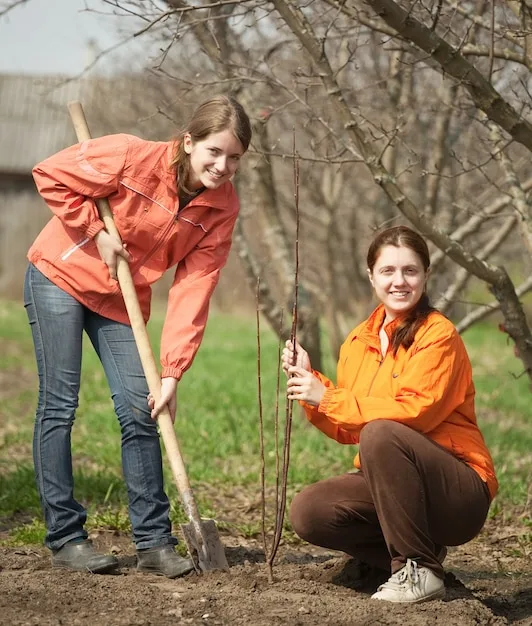
Our arborist plants with you rather than for you, so you can plant further trees confidently afterwards.
We say plainly that grafted walnuts typically bear in years 4–7 and grafted pecans in years 6–10, and that some sites suit walnuts better.
We do not have a study to quote, and we would be wary of anyone who did. What we can share is what we see and what horticultural practice generally supports.
Elevation, summer warmth, soil depth and early watering all move the timeline. A sheltered lowland plot may bear sooner than a cool upland one, which is why we give ranges instead of single numbers.
Consultation
¥4,400
One hour, a written shortlist and a first-year care calendar.
Planting session
¥11,000
Half a day, up to six saplings. Saplings are quoted separately in advance.
Layout plan
¥16,500
A scaled plan, annotated photos, a plant list and one round of revisions.
Think of it as paying a little at the start to avoid costly corrections later. A tree that is well matched and well planted needs fewer replacements and less guesswork. We cannot promise any particular outcome, and we do not frame nut trees as a way to earn money.
Freedom to follow your own rhythm. You are the only judge of each decision, which many people enjoy and some find tiring.
A written shortlist, a planting sketch, aftercare notes for two years and a follow-up call one month after planting. You stay in charge; we stay reachable.
Young trees do best with steady habits: deep watering in dry spells, mulch kept clear of the trunk, gentle formative pruning in the first years. Both routes depend on those habits. Our aftercare notes simply put them on paper, season by season, so they are easy to keep up.
Along a river, the bank buffer of native shrubs and grasses is a long-term habit too. It helps hold the bank and gives the plot a softer edge as the trees grow.
They enjoy long, warm summers. On higher Nagano plots, Shinano walnuts are often a more comfortable fit.
Pecans set nuts most reliably when Type I and Type II cultivars grow near each other.
Land near rivers is often subject to river management rules, so local permission may be needed before work begins.
Experienced gardeners are welcome too. Pollination planning and riverside layouts are where a second pair of eyes tends to help most.
If you are unsure which route fits, send a short note about your plot. We will tell you honestly whether guidance would add much.
Write to us